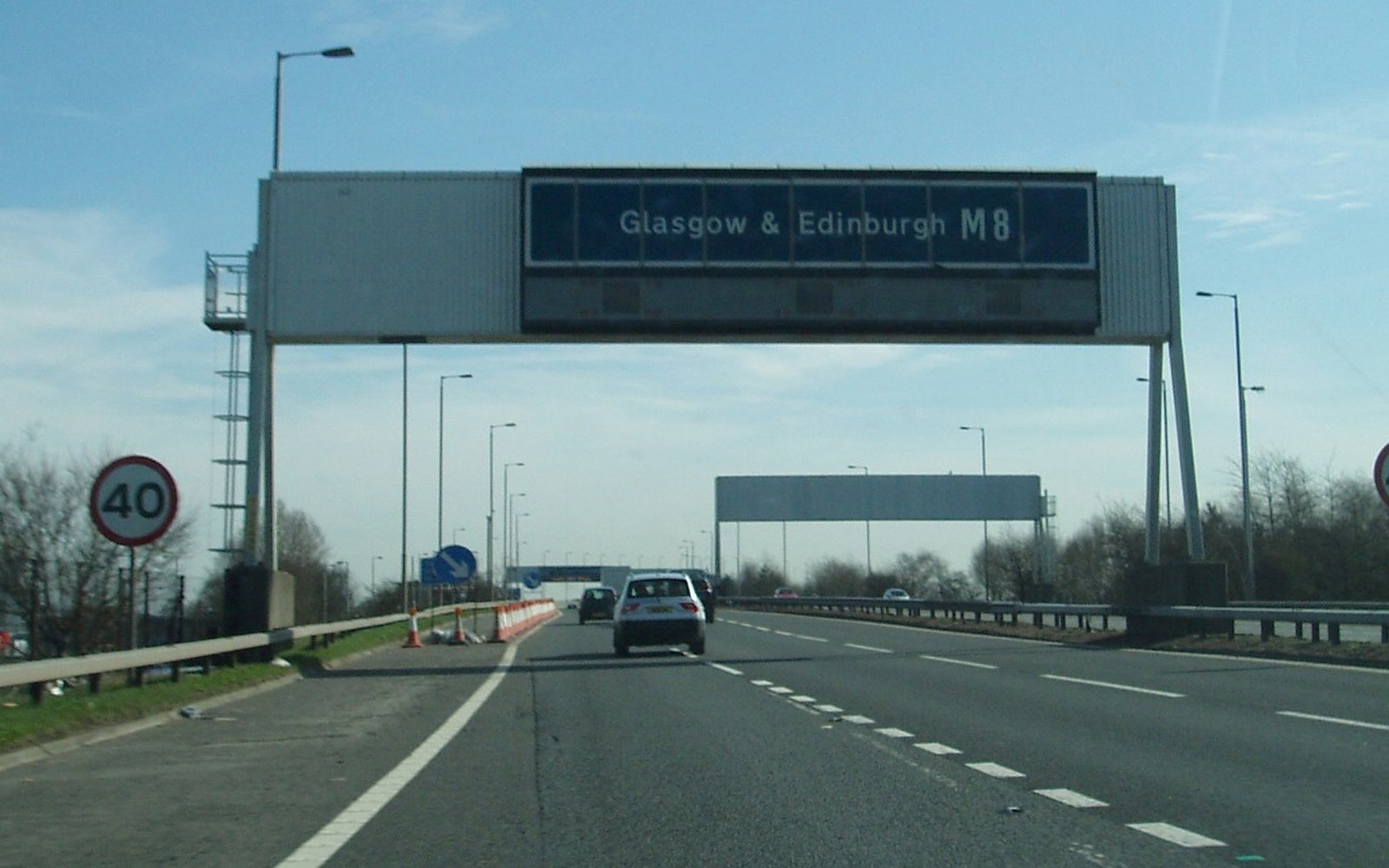
A Letter Designed to Be Read at 70 mph
In 1957, the Anderson Committee commissioned Jock Kinneir and Margaret Calvert to design a complete sign system for Britain's expanding motorway network. The typeface they developed — eventually named Transport — emerged from a direct legibility problem: at what distance, and at what speed, could a driver reliably read a road sign?
Kinneir and Calvert's answer was mixed-case lettering. Capital-only text, the convention on pre-motorway British signs, forces the eye to parse a uniformly sized block of characters. Lower-case letters carry distinctive ascenders and descenders — the rising d, the hanging p — that give each word a unique silhouette recognisable before the individual letters resolve. At motorway speeds, that shape-recognition buys the fraction of a second that matters.

Wood type was cut for sizes too large to cast in metal, and sorted by face and size rather than by alphabet.
Photo: Erik Mclean / Pexels
The team ran empirical tests on the A1 road north of London, timing legibility at measured distances. Results confirmed that mixed-case text could be read from further away than all-capitals set at the same height. The letterforms were drawn to be robust at the reproduction sizes dictated by sign manufacturing: strokes thick enough to survive retroreflective sheeting, spacing generous enough to prevent characters merging under headlights.
Transport was formalised across two weights — Medium for light lettering on dark grounds such as the characteristic motorway blue, Heavy for dark lettering on light grounds The complete sign system was adopted under the 1964 Traffic Signs Regulations and General Directions, making Transport legally mandatory on British public roads. It remains so.
The typeface has since been digitised and made available under an Open Government Licence through official government channels, allowing consistent use in planning and infrastructure documents. Few typefaces carry the institutional weight of Transport: it is not a brand choice but a parliamentary fact, embedded into the landscape by statute rather than fashion.