A Commission, a Cab, a Red Crayon
In 1977, New York State's Commerce Department launched a campaign to reverse the city's catastrophic image problem — crime, bankruptcy, urban flight. The advertising agency Wells Rich Greene held the account; Milton Glaser, already a co-founder of Push Pin Studios and a dominant figure in American illustration, contributed the logo as a pro bono addition to the campaign's first press run.
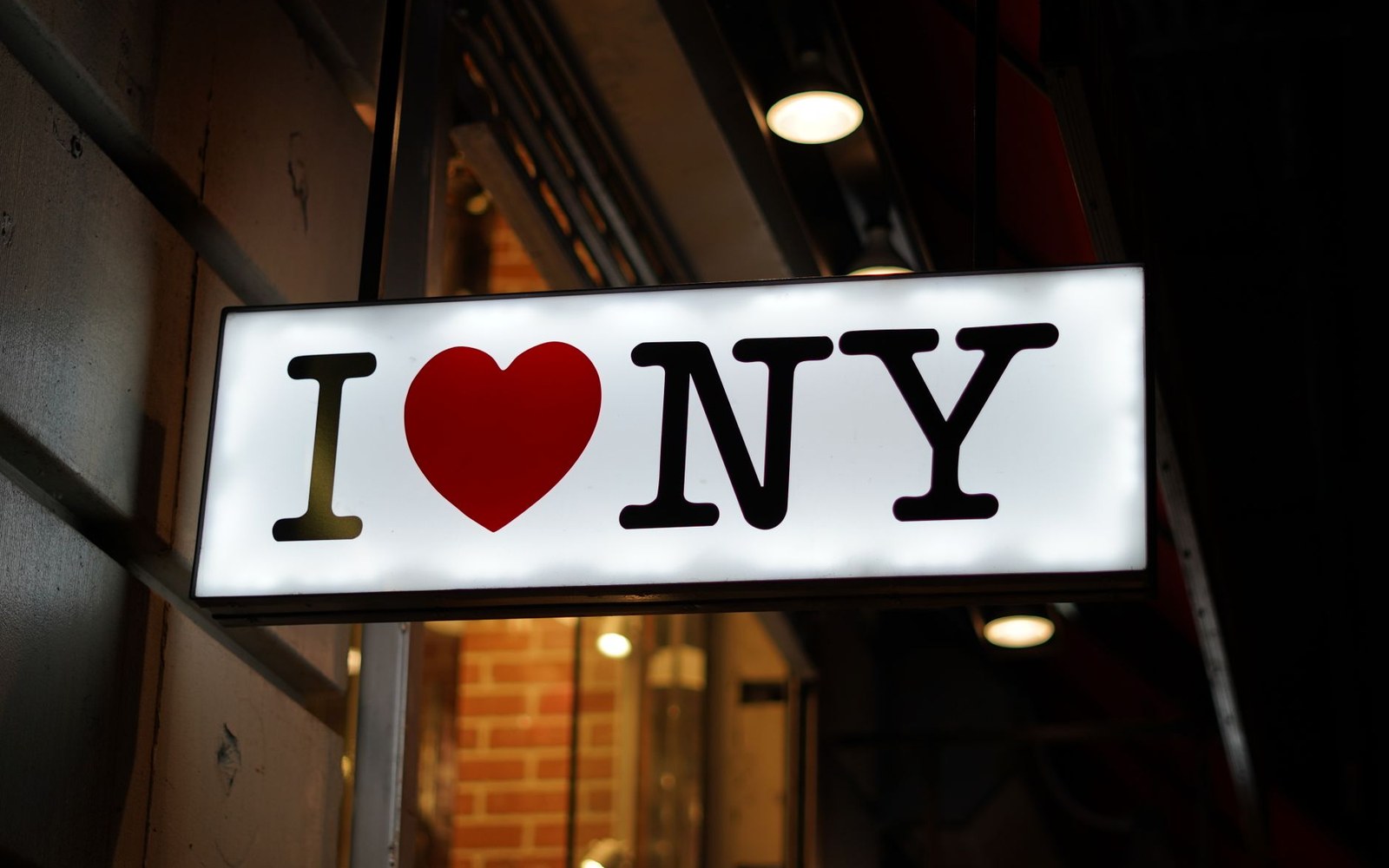
His own account, repeated in interviews over decades, places the sketch in the back of a taxi: a torn scrap of envelope, a red wax crayon, and the four-element composition that arrived almost fully formed — the capital I, a red heart in place of the word "love," the letters NY set in American Typewriter. That typeface choice was deliberate: American Typewriter, released by International Typeface Corporation in 1974, carried warmth and slight informality without tipping into sentimentality. The condensed, slab-serif letterforms read at a distance and reproduced cleanly across every surface from a T-shirt to a billboard.
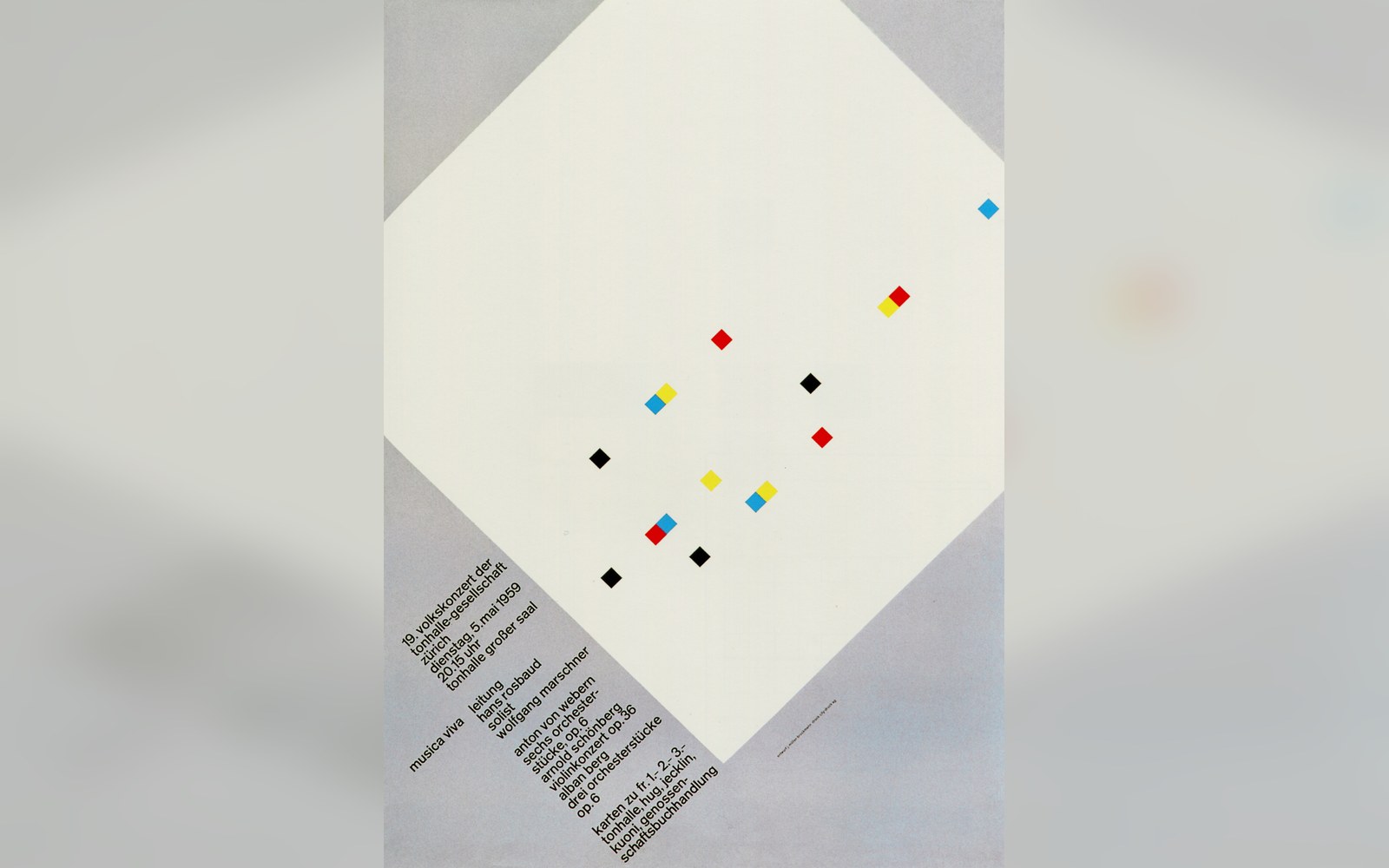
The Zurich concert posters were printed to one format and pasted in runs, so the grid had to hold at a glance.
Photo: Musica Viva. Müller-Brockmann · Wikimedia Commons
The heart — solid red, no outline — was the structural move. It replaced a word with a symbol yet required no translation. Combined with the stately capitals flanking it, the mark struck a tone neither civic-formal nor cheaply cute. New York State holds the trademark, and licensing has been administered continuously since the campaign's launch.
What happened next was entirely outside anyone's control. The mark became the template for a global vernacular: "I ♥ [place]" reproductions appeared on merchandise worldwide within years, almost none of them licensed. Glaser acknowledged the irony publicly — that the work's greatest measure of success was the speed with which it escaped legal ownership altogether. After 11 September 2001, he produced a revised version adding the line "More than ever," briefly distributed at no charge, the mark asserting continuity rather than tourism.
The envelope sketch, kept by Glaser, was donated to the Museum of Modern Art, where it entered the permanent collection — a thirty-second drawing that outlasted the campaign it was made for by half a century.